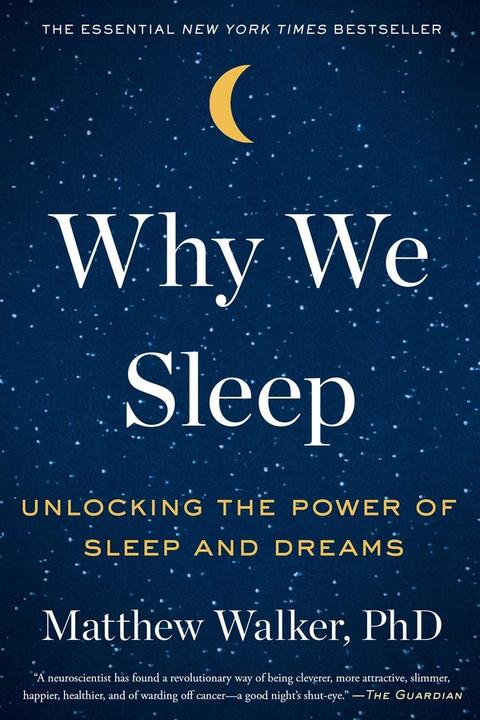
Why We Sleep Summary: The Sleep Crisis Destroying Your Health
by Matthew Walker
Why read this book
- 😴 Why sleep is the most underrated health behavior
- 🧠 How sleep deprivation destroys memory, creativity, and immune function
- ⏰ Practical sleep hygiene strategies backed by neuroscience
- 🎓 Written by UC Berkeley's leading sleep researcher
In one sentence
UC Berkeley sleep researcher Matthew Walker reveals the science behind sleep and why modern life is destroying it. Learn how sleep deprivation wrecks memory, creativity, immune function, and lifespan—plus practical strategies to fix your sleep.
Key takeaways
- Adults need 7-9 hours of sleep — there is no shortcut, and "I only need 6 hours" is almost always self-deception
- Sleep deprivation is cumulative — you cannot "catch up" on weekends; the damage compounds
- REM and NREM sleep serve different functions — both are essential for memory, learning, and emotional regulation
- Sleep before learning prepares your brain to absorb information; sleep after learning consolidates it
- Even moderate sleep loss impairs cognitive function as much as alcohol intoxication
- Chronic sleep deprivation increases risk of cancer, heart disease, diabetes, Alzheimer's, and mental health disorders
- Caffeine, alcohol, and screens are the three biggest sleep disruptors in modern life
- Your circadian rhythm is genetic — some people are naturally night owls, and fighting it has consequences
Key Findings & Ideas
- Aim for 7–9 hours — Walker argues most adults need seven to nine hours, and that routinely sleeping under about seven carries measurable costs to health and performance.
- Two kinds of sleep do different jobs — NREM (deep) sleep consolidates memory and clears the brain; REM (dreaming) sleep supports emotional regulation and creativity. They cycle roughly every 90 minutes.
- REM is back-loaded in the night — The last hours of an eight-hour night are REM-heavy, so cutting sleep short strips REM disproportionately — not just "a little less sleep."
- Caffeine masks, it doesn’t replace — Caffeine blocks the adenosine that signals sleepiness — it hides tiredness without removing the underlying sleep debt.
- Alcohol fragments sleep — The book describes alcohol as a sedative, not real sleep: it breaks the night into fragments and suppresses REM.
- Chronic short sleep has a long tail — Walker links persistent sleep deprivation to weakened immunity, weight gain, cardiovascular strain, and higher long-term dementia risk.
- Consistency and light matter most — Regular sleep and wake times plus dim evening light (screens suppress melatonin and delay sleep onset) are the highest-leverage habits.
Free cheat sheet: 8 lessons from Why We Sleep
A one-page printable summary of the book’s core lessons.
Summary
The most comprehensive and compelling book on sleep I have ever read.
I am becoming convinced (aided by this book) that being able to sleep well is a huge advantage in life.
This book is likely to convince you of the same.
It is a summary of scientific research on sleep to date, providing insight on how sleep affects cognitive and physical performance in both the short and long term, and what you can do improve your own sleep (which often involves avoiding things causing bad sleep).
Recommended for everyone, as sleep affects us all.
Who should read this
- Anyone who regularly sleeps less than 7 hours and thinks they're fine
- Parents who want to understand their children's sleep needs
- Professionals in high-performance fields (executives, athletes, doctors)
- People struggling with insomnia or poor sleep quality
- Those interested in the science behind why we spend a third of our lives unconscious
Favorite quotes
- The shorter your sleep, the shorter your life span.
- Sleep is the single most effective thing we can do to reset our brain and body health each day.
- The decimation of sleep throughout industrialized nations is having a catastrophic impact on our health, our wellness, even the safety and education of our children.
- Human beings are the only species that deliberately deprive themselves of sleep for no apparent gain.
- There is no major organ or process in the brain that is not optimally enhanced by sleep.
- Routinely sleeping less than six or seven hours a night demolishes your immune system.
- The best bridge between despair and hope is a good night's sleep.
- Caffeine has an average half-life of five to seven hours. If you have a coffee at 2pm, by midnight roughly a quarter of that caffeine is still circulating.
FAQ
How much sleep do adults need according to Why We Sleep?
Matthew Walker states that adults need 7-9 hours of sleep per night. He emphasizes that the percentage of the population who can survive on 6 hours or less without impairment, based on genetics, is essentially zero (less than 1%). Most people who claim they need less sleep are simply not aware of their cognitive impairment.
What are the stages of sleep?
Sleep cycles through two main types: NREM (Non-Rapid Eye Movement) and REM (Rapid Eye Movement). NREM has stages 1-4, with stages 3-4 being "deep sleep" important for physical restoration and memory consolidation. REM sleep is when most dreaming occurs and is crucial for emotional processing and creative problem-solving. A full cycle takes about 90 minutes.
What happens when you don't get enough sleep?
Sleep deprivation impairs: cognitive function (attention, memory, decision-making), immune system function (increased cancer risk, susceptibility to illness), emotional regulation (anxiety, depression), metabolic health (weight gain, diabetes risk), cardiovascular health (heart disease, stroke), and even DNA repair. Effects are cumulative and many are irreversible.
Does caffeine affect sleep?
Yes, significantly. Caffeine has a half-life of 5-7 hours, meaning half is still in your system hours later. A 2pm coffee means 25% of the caffeine remains at midnight. Caffeine also reduces deep (NREM) sleep even when you can fall asleep. Walker recommends avoiding caffeine after noon for optimal sleep quality.
Can you catch up on sleep on weekends?
Unfortunately, no. Walker explains that "sleep debt" cannot be fully repaid. While extra sleep can help somewhat, the damage from chronic sleep loss — cognitive impairment, immune suppression, emotional dysregulation — accumulates and cannot be fully reversed by occasional long sleeps. Consistent sleep is far more important than occasional catch-up.
What are Matthew Walker's tips for better sleep?
Key recommendations include: 1) Keep a consistent sleep schedule (even on weekends), 2) Avoid caffeine after noon, 3) Avoid alcohol near bedtime (it fragments sleep), 4) Keep your bedroom cool (65°F/18°C is optimal), 5) Minimize blue light exposure in the evening, 6) Avoid screens 1-2 hours before bed, 7) Get natural light exposure during the day, 8) Don't lie in bed awake — if you can't sleep, get up and do something relaxing.
What are the main findings in Why We Sleep?
Matthew Walker's research shows that sleeping less than 7 hours regularly increases your risk of cancer, heart disease, Alzheimer's, and early death. Even moderate sleep deprivation (6 hours/night) impairs cognitive function as much as being legally drunk. The book's most alarming finding: there is no major body system or brain function that isn't damaged by sleep loss.
How much sleep do you actually need according to Matthew Walker?
Walker recommends 7-9 hours of actual sleep (not just time in bed) for adults. He's adamant that people who claim to function fine on 5-6 hours are almost always wrong — they've simply forgotten what fully rested feels like. The genetic mutation that allows true short sleep (DEC2 gene) affects less than 1% of the population.
Is Why We Sleep accurate? Has it been criticized?
Some specific claims have been challenged — researcher Alexey Guzey published a detailed critique questioning certain statistics and the cancer study interpretations. Walker's core message (sleep is critically important and most people don't get enough) is well-supported by research, but some of the more dramatic claims should be taken with nuance. It's still the most comprehensive popular science book on sleep.
What is the main argument of Why We Sleep?
That sleep is not optional downtime but a biological necessity, and that widespread sleep deprivation quietly damages health. Walker argues 7–9 hours protects memory, immunity, mood, and long-term brain health. (Some of the book’s stronger claims have been debated by other researchers.)
Detailed Notes
Click to expand the full detailed notes →
Detailed Notes
Click to expand the full detailed notes →
Notes
Part 1 - This Thing Called Sleep
Chapter 1 - To Sleep . . .
- The shorter your sleep, the shorter your life span.
- Sleep is the most effective thing we can do to reset our brain and body health each day.
Chapter 2 - Caffeine, Jet Lag, and Melatonin
- Your circadian rhythm is one of two factors determining wake and sleep. Melatonin helps regulate the timing of when sleep occurs by signalling darkness throughout the organism, but has little influence on the generation of sleep itself.
- Sleep pressure, caused by a buildup of the chemical adenosine in your brain, is the second factor affecting sleepiness.
- Caffeine works by blocking the receptors that adenosine affects (after about 30 minutes).
- Some people process caffeine faster than others, and we get less efficient as we age.
- To identify sleep deficiency:
- If you didn’t set an alarm clock, would you wake up on time?
- Do you find yourself re-reading things?
- Can you function optimally before noon without caffeine?
Chapter 3 - Defining and Generating Sleep
- When it comes to information processing, think of the wake state principally as reception (experiencing and constantly learning the world around you), NREM sleep as reflection (storing and strengthening those raw ingredients of new facts and skills), and REM sleep as integration (interconnecting these raw ingredients with each other, with all past experiences, and, in doing so, building an ever more accurate model of how the world works, including innovative insights and problem-solving abilities).
- Why did evolution decide to outlaw muscle activity during REM sleep? Because by eliminating muscle activity you are prevented from acting out your dream experience.
Chapter 4 - Ape Beds, Dinosaurs, and Napping with Half a Brain
- That humans (and all other species) can never sleep back that which we have previously lost is one of the most important take-homes of this book, the saddening consequences of which I will describe in chapters 7 and 8.
How Should We Sleep?
- Throughout developed nations, most adults currently sleep in a monophasic pattern—that is, we try to take a long, single bout of slumber at night, the average duration of which is now less than seven hours.
- Visit cultures that are untouched by electricity and you often see something rather different. Hunter-gatherer tribes, such as the Gabra in northern Kenya or the San people in the Kalahari Desert, whose way of life has changed little over the past thousands of years, sleep in a biphasic pattern. Both these groups take a similarly longer sleep period at night (seven to eight hours of time in bed, achieving about seven hours of sleep), followed by a thirty- to sixty-minute nap in the afternoon.
- Apparent from this remarkable study is this fact: when we are cleaved from the innate practice of biphasic sleep, our lives are shortened. It is perhaps unsurprising that in the small enclaves of Greece where siestas still remain intact, such as the island of Ikaria, men are nearly four times as likely to reach the age of ninety as American males.
REM Sleep
- REM sleep exquisitely recalibrates and fine-tunes the emotional circuits of the human brain (discussed in detail in part 3 of the book).
- Second, and more critical, if you multiply these individual benefits within and across groups and tribes, all of which are experiencing an ever-increasing intensity and richness of REM sleep over millennia, we can start to see how this nightly REM-sleep recalibration of our emotional brains could have scaled rapidly and exponentially.
- REM sleep fuels creativity.
Chapter 5 - Changes in Sleep Across the Life Span
- Alcohol is one of the most powerful suppressors of REM sleep that we know of.
Childhood Sleep
- The changes in deep NREM sleep always precede the cognitive and developmental milestones within the brain by several weeks or months, implying a direction of influence: deep sleep may be a driving force of brain maturation, not the other way around.
- We are still learning more about the role of sleep in development. However, a strong case can already be made for defending sleep time in our adolescent youth, rather than denigrating sleep as a sign of laziness.
Sleep in Midlife and Old Age
- That older adults simply need less sleep is a myth. Older adults appear to need just as much sleep as they do in midlife, but are simply less able to generate that (still necessary) sleep.
- As you enter your fourth decade of life, there is a palpable reduction in the electrical quantity and quality of that deep NREM sleep.
- The second hallmark of altered sleep as we age, and one that older adults are more conscious of, is fragmentation. The older we get, the more frequently we wake up throughout the night.
- Due to sleep fragmentation, older individuals will suffer a reduction in sleep efficiency, defined as the percent of time you were asleep while in bed.
- As healthy teenagers, we enjoyed a sleep efficiency of about 95 percent. As a reference anchor, most sleep doctors consider good-quality sleep to involve a sleep efficiency of 90 percent or above.
- Any individual, no matter what age, will exhibit physical ailments, mental health instability, reduced alertness, and impaired memory if their sleep is chronically disrupted.
- The third sleep change with advanced age is that of circadian timing. In sharp contrast to adolescents, seniors commonly experience a regression in sleep timing, leading to earlier and earlier bedtimes.
Part 2 - Why Should You Sleep?
Chapter 6 - Your Mother and Shakespeare Knew
The Benefits of Sleep for the Brain
- Of the many advantages conferred by sleep on the brain, that of memory is especially impressive, and particularly well understood. Sleep has proven itself time and again as a memory aid: both before learning, to prepare your brain for initially making new memories, and after learning, to cement those memories and prevent forgetting.
Sleep for Other Types of Memory
- My final discovery, in what spanned almost a decade of research, identified the type of sleep responsible for the overnight motor-skill enhancement, carrying with it societal and medical lessons. The increases in speed and accuracy, underpinned by efficient automaticity, were directly related to the amount of stage 2 NREM, especially in the last two hours of an eight-hour night of sleep (e.g., from five to seven a.m., should you have fallen asleep at eleven p.m.).
- Obtain anything less than eight hours of sleep a night, and especially less than six hours a night, and the following happens: time to physical exhaustion drops by 10 to 30 percent, and aerobic output is significantly reduced. Similar impairments are observed in limb extension force and vertical jump height, together with decreases in peak and sustained muscle strength. Add to this marked impairments in cardiovascular, metabolic, and respiratory capabilities that hamper an underslept body, including faster rates of lactic acid buildup, reductions in blood oxygen saturation, and converse increases in blood carbon dioxide, due in part to a reduction in the amount of air that the lungs can expire. Even the ability of the body to cool itself during physical exertion through sweating - a critical part of peak performance - is impaired by sleep loss.
- Even teams that are aware of sleep’s importance before a game are surprised by my declaration of the equally, if not more, essential need for sleep in the days after a game. Post-performance sleep accelerates physical recovery from common inflammation, stimulates muscle repair, and helps restock cellular energy in the form of glucose and glycogen.
Sleep for Creativity
- A final benefit of sleep for memory is arguably the most remarkable of all: creativity.
Chapter 7 - Too Extreme for the Guinness Book of World Records
- In the following two chapters, we will learn precisely why and how sleep loss inflicts such devastating effects on the brain, linking it to numerous neurological and psychiatric conditions (e.g., Alzheimer’s disease, anxiety, depression, bipolar disorder, suicide, stroke, and chronic pain), and on every physiological system of the body, further contributing to countless disorders and disease (e.g., cancer, diabetes, heart attacks, infertility, weight gain, obesity, and immune deficiency). No facet of the human body is spared the crippling, noxious harm of sleep loss.
Pay Attention
- One brain function that buckles under even the smallest dose of sleep deprivation is concentration. The deadly societal consequences of these concentration failures play out most obviously and fatally in the form of drowsy driving. Every hour, someone dies in a traffic accident in the US due to a fatigue-related error.
- Not only this, but participants who are sleep deprived consistently underestimate the degree to which their performance is reduced.
- Humans need more than seven hours of sleep each night to maintain cognitive performance. After ten days of just seven hours of sleep, the brain is as dysfunctional as it would be after going without sleep for twenty-four hours.
- Three full nights of recovery sleep (i.e., more nights than a weekend) are insufficient to restore performance back to normal levels after a week of short sleeping. Finally, the human mind cannot accurately sense how sleep-deprived it is when sleep-deprived.
- There are many things that I hope readers take away from this book. This is one of the most important: if you are drowsy while driving, please, please stop. It is lethal.
Can Naps Help?
- No matter what you may have heard or read in the popular media, there is no scientific evidence we have suggesting that a drug, a device, or any amount of psychological willpower can replace sleep. Power naps may momentarily increase basic concentration under conditions of sleep deprivation, as can caffeine up to a certain dose. Neither naps nor caffeine can salvage more complex functions of the brain, including learning, memory, emotional stability, complex reasoning, or decision-making.
- We have, however, discovered a very rare collection of individuals who appear to be able to survive on six hours of sleep, and show minimal impairment—a sleepless elite, as it were. Give them hours and hours of sleep opportunity in the laboratory, with no alarms or wake-up calls, and still they naturally sleep this short amount and no more. Part of the explanation appears to lie in their genetics, specifically a sub-variant of a gene called BHLHE41.
Emotional Irrationality
- Many emotional and psychiatric problems can occur under sleep deprivation. Conversely, treating some of these issues with sleep has shown success.
Tired and Forgetful?
- In other words, if you don’t sleep the very first night after learning, you lose the chance to consolidate those memories, even if you get lots of catch-up sleep thereafter.
Sleep and Alzheimer’s Disease
- A lack of sleep is fast becoming recognized as a key lifestyle factor determining whether or not you will develop Alzheimer’s disease.
- Sleep represents a new candidate for hope on all three of these fronts: diagnosis, prevention, and therapeutics.
Chapter 8 - Cancer, Heart Attacks, and a Shorter Life
Sleep Deprivation and the Body
- Widening the lens of focus, there are more than twenty large-scale epidemiological studies that have tracked millions of people over many decades, all of which report the same clear relationship: the shorter your sleep, the shorter your life. The leading causes of disease and death in developed nations—diseases that are crippling health-care systems, such as heart disease, obesity, dementia, diabetes, and cancer—all have recognized causal links to a lack of sleep.
Sleep Loss and the Cardiovascular System
- In the Northern Hemisphere, the switch to daylight savings time in March results in most people losing an hour of sleep opportunity. Should you tabulate millions of daily hospital records, as researchers have done, you discover that this seemingly trivial sleep reduction comes with a frightening spike in heart attacks the following day. Impressively, it works both ways. In the autumn within the Northern Hemisphere, when the clocks move forward and we gain an hour of sleep opportunity time, rates of heart attacks plummet the day after. A similar rise-and-fall relationship can be seen with the number of traffic accidents, proving that the brain, by way of attention lapses and microsleeps, is just as sensitive as the heart to very small perturbations of sleep.
Weight Gain and Obesity
- The upshot of all this work can be summarized as follows: short sleep (of the type that many adults in first-world countries commonly and routinely report) will increase hunger and appetite, compromise impulse control within the brain, increase food consumption (especially of high-calorie foods), decrease feelings of food satisfaction after eating, and prevent effective weight loss when dieting.
Sleep Loss and the Reproductive System
- Take a group of lean, healthy young males in their mid-twenties and limit them to five hours of sleep for one week, as a research group did at the University of Chicago. Sample the hormone levels circulating in the blood of these tired participants and you will find a marked drop in testosterone relative to their own baseline levels of testosterone when fully rested. The size of the hormonal blunting effect is so large that it effectively ages a man by ten to fifteen years in terms of testosterone virility.
Sleep Loss and the Immune System
- Sleep deprivation vastly increases your likelihood of infection, and reduces your response to flu vaccine.
Part 3 - How and Why We Dream
Chapter 9 - Routinely Psychotic
- Emotional concerns are what have been found to correlate most with our dreams.
Chapter 10 - Dreaming as Overnight Therapy
Dreaming - The Soothing Balm
- In fact, REM sleep is the only time during the twenty-four-hour period when your brain is completely devoid of this anxiety-triggering molecule. Noradrenaline, also known as norepinephrine, is the brain equivalent to a body chemical you already know and have felt the effects of: adrenaline (epinephrine).
Dreaming to Decode Waking Experiences
- There are regions of your brain whose job it is to read and decode the value and meaning of emotional signals, especially faces. And it is that very same essential set of brain regions, or network, that REM sleep recalibrates at night.
- The outside world had become a more threatening and aversive place when the brain lacked REM sleep—untruthfully so.
Chapter 11 - Dream Creativity and Dream Control
Dreaming: The Creative Incubator
- Deep NREM sleep strengthens individual memories, as we now know. But it is REM sleep that offers the masterful and complementary benefit of fusing and blending those elemental ingredients together, in abstract and highly novel ways.
Part 4 - From Sleeping Pills to Society Transformed
Chapter 12 - Things That Go Bump in the Night
Sleep Disorders and Death Caused by No Sleep
- Without belaboring the point, insomnia is one of the most pressing and prevalent medical issues facing modern society, yet few speak of it this way, recognize the burden, or feel there is a need to act.
Chapter 13 - iPads, Factory Whistles, and Nightcaps
What’s Stopping You from Sleeping?
- Beyond longer commute times and sleep procrastination caused by late-evening television and digital entertainment—both of which are not unimportant in their top-and-tail snipping of our sleep time and that of our children—five key factors have powerfully changed how much and how well we sleep: (1) constant electric light as well as LED light, (2) regularized temperature, (3) caffeine (discussed in chapter 2), (4) alcohol, and (5) a legacy of punching time cards.
- Compared to reading a printed book, reading on an iPad suppressed melatonin release by over 50 percent at night. Indeed, iPad reading delayed the rise of melatonin by up to three hours, relative to the natural rise in these same individuals when reading a printed book.
- Due to its omnipresence, solutions for limiting exposure to artificial evening light are challenging. A good start is to create lowered, dim light in the rooms where you spend your evening hours. Avoid powerful overhead lights. Mood lighting is the order of the night. Some committed individuals will even wear yellow-tinted glasses indoors in the afternoon and evening to help filter out the most harmful blue light that suppresses melatonin.
- Maintaining complete darkness throughout the night is equally critical, the easiest fix for which comes from blackout curtains. Finally, you can install software on your computers, phones, and tablet devices that gradually de-saturate the harmful blue LED light as evening progresses.
Turning Down the Nightcap - Alcohol
- Yet this is not the worst of it when considering the effects of the evening nightcap on your slumber. More than its artificial sedating influence, alcohol dismantles an individual’s sleep in an additional two ways.
- First, alcohol fragments sleep, littering the night with brief awakenings. Alcohol-infused sleep is therefore not continuous and, as a result, not restorative. Unfortunately, most of these nighttime awakenings go unnoticed by the sleeper since they don’t remember them
- Second, alcohol is one of the most powerful suppressors of REM sleep that we know of.
- Glib advice aside, what is the recommendation when it comes to sleep and alcohol? It is hard not to sound puritanical, but the evidence is so strong regarding alcohol’s harmful effects on sleep that to do otherwise would be doing you, and the science, a disservice. Many people enjoy a glass of wine with dinner, even an aperitif thereafter. But it takes your liver and kidneys many hours to degrade and excrete that alcohol, even if you are an individual with fast-acting enzymes for ethanol decomposition. Nightly alcohol will disrupt your sleep, and the annoying advice of abstinence is the best, and most honest, I can offer.
Get the Nighttime Chills
- Thermal environment, specifically the proximal temperature around your body and brain, is perhaps the most underappreciated factor determining the ease with which you will fall asleep tonight, and the quality of sleep you will obtain. Ambient room temperature, bedding, and nightclothes dictate the thermal envelope that wraps around your body at night.
- A bedroom temperature of around 65 degrees Fahrenheit (18.3°C) is ideal for the sleep of most people, assuming standard bedding and clothing.
- Knowingly or not, you have probably used this proven temperature manipulation to help your own sleep. A luxury for many is to draw a hot bath in the evening and soak the body before bedtime. We feel it helps us fall asleep more quickly, which it can, but for the opposite reason most people imagine. You do not fall asleep faster because you are toasty and warm to the core. Instead, the hot bath invites blood to the surface of your skin, giving you that flushed appearance. When you get out of the bath, those dilated blood vessels on the surface quickly help radiate out inner heat, and your core body temperature plummets. Consequently, you fall asleep more quickly because your core is colder. Hot baths prior to bed can also induce 10 to 15 percent more deep NREM sleep in healthy adults.
Chapter 14 - Hurting and Helping Your Sleep
Pills vs. Therapy
Should You Take Two of These Before Bed?
- No past or current sleeping medications on the legal (or illegal) market induce natural sleep. Don’t get me wrong—no one would claim that you are awake after taking prescription sleeping pills. But to suggest that you are experiencing natural sleep would be an equally false assertion.
- Those taking sleeping pills were 4.6 times more likely to die over this short two-and-a-half-year period than those who were not using sleeping pills. Kripke further discovered that the risk of death scaled with the frequency of use. Those individuals classified as heavy users, defined as taking more than 132 pills per year, were 5.3 times more likely to die over the study period than matched control participants who were not using sleeping pills.
- More alarming was the mortality risk for people who only dabbled in sleeping pill use. Even very occasional users—those defined as taking just eighteen pills per year—were still 3.6 times more likely to die at some point across the assessment window than non-users.
Don’t Take Two of These, Instead Try These
- Currently, the most effective of these is called cognitive behavioral therapy for insomnia, or CBT-I, and it is rapidly being embraced by the medical community as the first-line treatment.
- Working with a therapist for several weeks, patients are provided with a bespoke set of techniques intended to break bad sleep habits and address anxieties that have been inhibiting sleep. CBT-I builds on basic sleep hygiene principles that I describe in the appendix, supplemented with methods individualized for the patient, their problems, and their lifestyle. Some are obvious, others not so obvious, and still others are counterintuitive.
- The obvious methods involve reducing caffeine and alcohol intake, removing screen technology from the bedroom, and having a cool bedroom. In addition, patients must (1) establish a regular bedtime and wake-up time, even on weekends, (2) go to bed only when sleepy and avoid sleeping on the couch early/mid-evenings, (3) never lie awake in bed for a significant time period; rather, get out of bed and do something quiet and relaxing until the urge to sleep returns, (4) avoid daytime napping if you are having difficulty sleeping at night, (5) reduce anxiety-provoking thoughts and worries by learning to mentally decelerate before bed, and (6) remove visible clockfaces from view in the bedroom, preventing clock-watching anxiety at night.
General Good Sleep Practices
- For those of us who are not suffering from insomnia or another sleep disorder, there is much we can do to secure a far better night of sleep using what we call good sleep hygiene practices, for which a list of twelve key tips can be found at the National Institutes of Health website; also offered in the appendix of this book.
- All twelve suggestions are superb advice, but if you can only adhere to one of these each and every day, make it: going to bed and waking up at the same time of day no matter what. It is perhaps the single most effective way of helping improve your sleep, even though it involves the use of an alarm clock.
- It is still a clear bidirectional relationship, however, with a significant trend toward increasingly better sleep with increasing levels of physical activity, and a strong influence of sleep on daytime physical activity. Participants also feel more alert and energetic as a result of the sleep improvement, and signs of depression proportionally decrease.
- One brief note of caution regarding physical activity: try not to exercise right before bed. Body temperature can remain high for an hour or two after physical exertion. Should this occur too close to bedtime, it can be difficult to drop your core temperature sufficiently to initiate sleep due to the exercise-driven increase in metabolic rate. Best to get your workout in at least two to three hours before turning the bedside light out (none LED-powered, I trust).
Chapter 15 - Sleep and Society: What Medicine and Education Are Doing Wrong; What Google and NASA Are Doing Right
- REM sleep is what stands between rationality and insanity.
- Studies on changing school start times to an hour later have shown higher GPAs following the change, increased life expectancy due to lower traffic accidents, increased attendance, and more.
Sleep and Health Care
- The residency system was developed by a doctor who later turned out to be a cocaine addict, Dr. William Halsted.
- The number of errors vastly increase when residents and doctors are deprived of sleep. They themselves are much more likely to die in a traffic accident after a long shift.
- You should ask your doctor how much sleep they have had before undergoing any serious surgery.
Chapter 16 - A New Vision for Sleep in the Twenty-First Century
- For me, addressing this issue involves two steps of logic. First, we must understand why the problem of deficient sleep seems to be so resistant to change, and thus persists and grows worse. Second, we must develop a structured model for effecting change at every possible leverage point we can identify.
Appendix
Twelve Tips for Healthy Sleep
- Stick to a sleep schedule
- Exercise is great, but not too late in the day. Try to exercise at least thirty minutes on most days but not later than two to three hours before your bedtime.
- Avoid caffeine and nicotine.
- Avoid alcoholic drinks before bed.
- Avoid large meals and beverages late at night.
- If possible, avoid medicines that delay or disrupt your sleep.
- Don’t take naps after 3 p.m.
- Relax before bed. Don’t overschedule your day so that no time is left for unwinding. A relaxing activity, such as reading or listening to music, should be part of your bedtime ritual.
- Take a hot bath before bed.
- Dark bedroom, cool bedroom, gadget-free bedroom.
- Have the right sunlight exposure. Daylight is key to regulating daily sleep patterns. Try to get outside in natural sunlight for at least thirty minutes each day. If possible, wake up with the sun or use very bright lights in the morning.
- Don’t lie in bed awake.